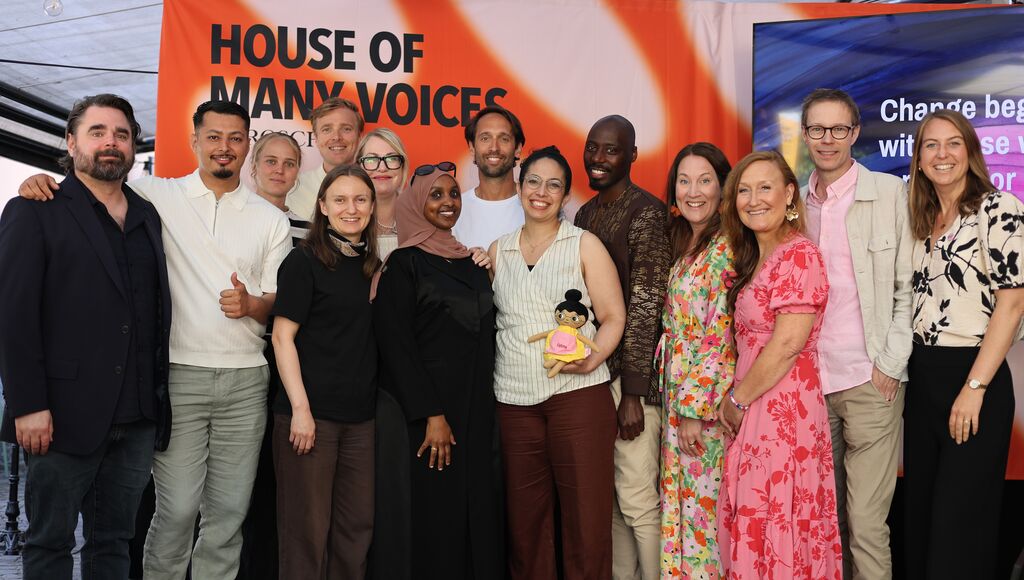
Societal challenges in focus at House of Many Voices in Almedalen 2026
Insights|July 2, 2026
Many of today’s most pressing societal challenges are often discussed separately. During the presentations on our House of Many Voices stage during Almedalen Week, however, a different picture emerged. Across conversations on children’s rights, education, health, crime prevention, social innovation, and partnerships, speakers repeatedly returned to the same conclusion: these challenges are deeply connected, they begin early, and solving them requires long-term collaboration across sectors.
For the second consecutive year, we invited several of our pro bono partners to shape the program based on their own expertise.
This year’s stage featured:
• Save the Children Sweden: Children’s living conditions in Sweden and the future of development aid.
• Prinsparets Stiftelse: Digital safety and ensuring every child learns to read.
• Beredskapslyftet: Early intervention to prevent children and young people from becoming involved in crime.
• Generation Pep: Children’s health and the systems that shape it.
• Reach for Change: Scaling social innovations that already work.
• Min Stora Dag: Partnerships, wellbeing, and support for children facing serious challenges.
The initiative also reflects a broader ambition. As participation in Almedalen has become increasingly resource-intensive, there is a growing risk that only organizations with substantial financial resources can make their voices heard. By opening its stage to civil society organizations, House of Many Voices seeks to ensure that a wider range of perspectives continues to shape public dialogue.
One message surfaced throughout the week: inequality rarely begins later in life. It begins early, often before it is fully visible.
During Rädda Barnen’s sessions, the conversations focused on how children’s living conditions shape opportunities throughout life, both in Sweden and globally. Economic vulnerability affects much more than household finances. It influences education, health, participation, and future opportunities, while changes in international development policy have direct consequences for children living in the world’s most vulnerable communities.
Acting Secretary General Cecilia Chatterjee-Martinsen reminded the audience that children’s rights are universal and emphasized that both national and international decisions must be viewed from the perspective of the child.
Education emerged as another recurring theme during Prinsparets Stiftelse’s discussions on digital safety and literacy. Secretary General Helene Öberg described one of the foundation’s key findings from its recent research review on dyslexia.
“The most worrying insight was that unnecessarily many children risk developing reading and writing difficulties because reading instruction is not evidence-based.”
The discussion made clear that reading is about far more than academic performance. Björn Kindenberg, lecturer and researcher in literacy education, argued that reading is fundamental to participating in society.
Björn Kindenberg“If you don’t have citizens who read, you don’t have citizens who can contribute to society.”
The foundation’s earlier session addressed young people’s digital lives from another perspective. Rather than framing technology as something to fear, the discussion explored how adults, policymakers, and digital platforms can better understand young people’s experiences while creating safer online environments that protect both wellbeing and freedom of expression.
The importance of acting before problems become entrenched was central to Beredskapslyftet’s discussion about preventing children from becoming involved in crime. Representatives from the police, social services, and civil society presented the Rätt Kurva program, which brings different actors together around children identified as being at risk.
Police officer Michel Lancha reflected on lessons learned over many years of working with young people.
“We’ve often said afterwards that we could see early on that things were heading in the wrong direction. Now we finally have a model that allows us to act early together.”
Instead of responding only after criminality has taken hold, the model focuses on identifying risks early and supporting both children and their families before problems escalate.
Children’s health was another area where speakers argued for moving beyond individual responsibility. During Generation Pep’s two sessions, discussions focused on how food environments, physical activity, and mental wellbeing are shaped by the systems surrounding children.
Opening the program, CEO Carolina Klüft explained that the organization’s tenth anniversary was not only an opportunity to reflect on the past, but also to look ahead and ask what more society must do to improve children’s health.
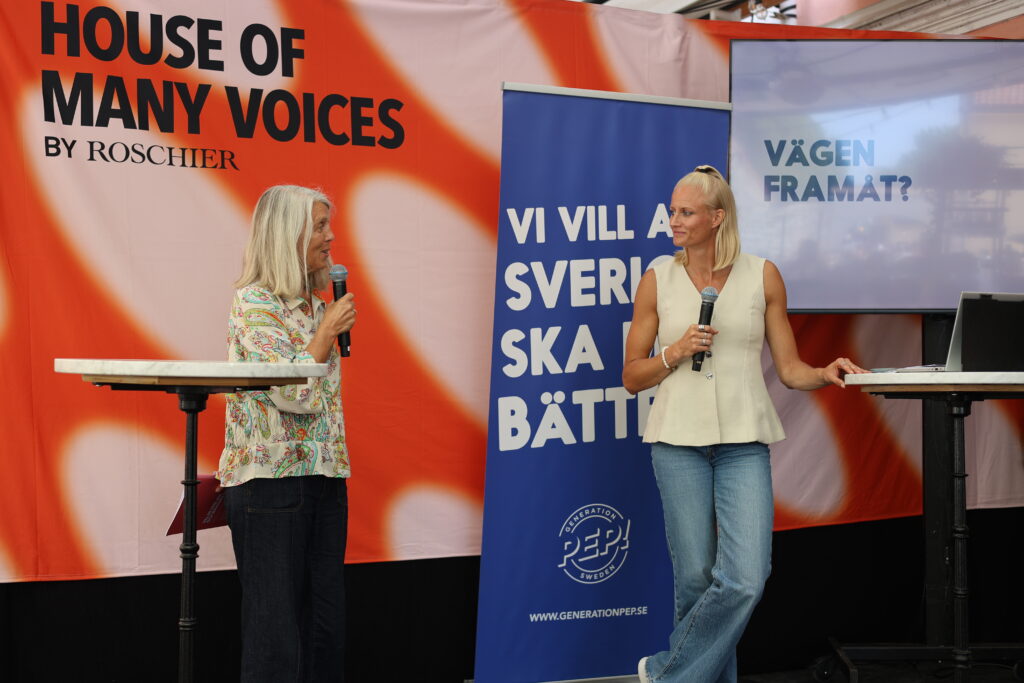
Presenting Generation Pep’s future report, McKinsey senior partner Karsten Dalgaard argued that investing in children’s health is one of society’s smartest long-term investments.
“Early interventions work.”
He emphasized that healthier childhoods not only improve individual wellbeing but also strengthen society through better health, higher participation, and stronger long-term outcomes.
While many discussions focused on identifying problems, Reach for Change highlighted the many solutions that already exist. As an international nonprofit supporting social entrepreneurs, the organization explored why successful initiatives often struggle to grow beyond individual municipalities or pilot projects.
CEO Sofia Breitholtz argued that Sweden is not short of innovation. The real challenge is creating the funding, partnerships, and long-term commitment needed to scale ideas that have already proven their impact.
Katarina Berg“It’s not just about giving money. It’s about opening doors.”
Entrepreneur and author Arash Gilan added another perspective by reflecting on the role of technology and human connection in future societal development.
“The only thing that is truly valuable going forward is what cannot be automated.”
Rather than seeing technology as the solution to every challenge, he argued that relationships, empathy, and human judgment will become increasingly important.
The conversations hosted by Min Stora Dag focused on how meaningful partnerships can improve the lives of children living with serious illnesses and diagnoses. Moderator and journalist Petra Nordlund McGahan led discussions on how organizations can translate good intentions into lasting engagement and measurable impact.
Former Spotify HR executive and Min Stora Dag ambassador Katarina Berg reflected on what makes partnerships meaningful.
“It’s not just about giving money. It’s about opening doors.”
She described how companies can contribute through their employees, expertise, and networks, creating experiences that strengthen both children and their families while building engagement throughout the organization.
Although the conversations covered very different topics, from children’s rights and education to health, crime prevention, social entrepreneurship, and partnerships, they repeatedly returned to the same conclusion. Prevention is more effective than reacting after problems have grown. Young people should be involved in shaping solutions. And lasting progress depends on organizations working together rather than separately.
Tuesday afternoon concluded with a gathering for partners, clients, and guests that extended the conversations beyond the stage. In her welcome remarks, Roschier Partner Emelie Zellmer reflected on the value of bringing together organizations approaching societal challenges from different perspectives.
As she put it, the ambition is not only to host conversations, but to “create space to connect, exchange perspectives, and continue the dialogue.”
That ambition reflected the week. Opening the House of Many Voices stage to these organizations was not about finding one common answer. It was about creating space for different experiences, ideas, and expertise to meet, making public conversation broader, more inclusive, and ultimately more capable of addressing the challenges ahead.
Read more:
House of Many Voices in Almedalen 2026 – a platform for important voices
Every child’s right to a strong start
When systems shape outcomes
Prevention instead of reaction
The role of collaboration and solutions on the ground
A changing childhood