Our leadership seminars conclude with a look at trust and inclusion
Insights|October 22, 2026
People are more likely to contribute when they know their views will be taken seriously. That confidence develops through experience: whether a leader listens to a concern, welcomes a difficult question, or asks for an opinion from someone who has not yet spoken. Under pressure, those moments can be easy to overlook.
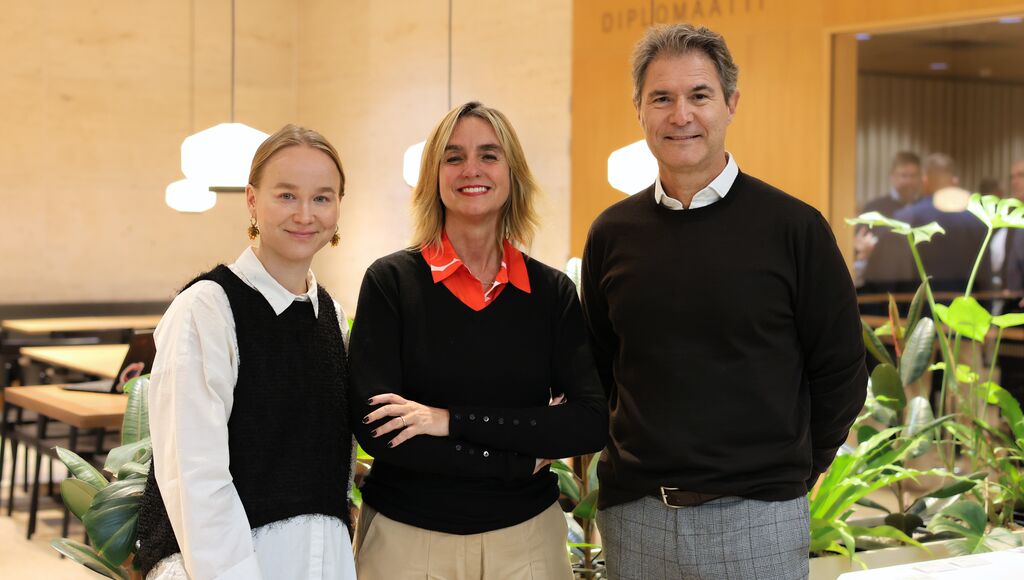
At our third and final leadership breakfast this fall, Leadership Educator and Team Coach Joel Casse and Vanessa Iglesias from Nokia joined us to discuss Outstanding Leadership. With Ella Turta once again moderating, they explored how leaders can create an environment where people feel safe to be themselves and contribute.
Both speakers are involved in Nokia’s OUTstanding Leaders program for LGBTQ+ employees and allies at Nokia and its partner companies. Roschier has participated since the program began. Now in its sixth year, it brings together people across countries, functions, and seniority levels to develop their leadership skills and build connections.
Joel, who helped design and deliver the program, has been struck by how readily participants share their experiences. In executive programs, people often begin by comparing responsibilities, team sizes, and reporting lines. In this group, he found a willingness to listen and support one another from the outset.
Joel CasseIt’s not about titles. It’s not about hierarchies.
“It’s not about titles. It’s not about hierarchies.”
The program leaves time for those connections to develop. Vanessa makes similar space in her own team through “Tell me more” sessions, inviting four or five colleagues to spend half an hour talking about anything except work. Family, hobbies, and everyday interests give them a chance to get to know one another, particularly when much of their contact happens online.
For Vanessa, this is time well spent. Knowing people better has also made her more attentive to small interactions that can leave someone feeling uncomfortable or excluded.
Trust becomes especially important when people disagree. Vanessa described a colleague who regularly asks uncomfortable questions at all-hands meetings. She makes a point of thanking her.
“I love it, because it means she feels comfortable to ask me something very annoying.”
Joel emphasized how much depends on that response. Leaders may ask for openness, but when someone raises a difficult issue, their reaction shows the team what that invitation means. A dismissive answer can discourage more than the person who asked.
The discussion also turned to how leaders make use of the diversity within their teams. Recruiting people with different backgrounds brings a wider range of experience into an organization. Meetings need to give those people an opportunity to contribute.
Joel encouraged leaders to seek views beyond the usual speakers and allow enough time to explore them. He also suggested speaking last, so that the leader’s opinion does not set the direction before others have had a chance to think.
That approach needs an explanation. When Joel deliberately held back in meetings, his manager interpreted his silence as disengagement. His intention had been to give others more room.
“The teams don’t have a crystal ball,” he said.
People need the same clarity when leaders delegate more responsibility. They should understand why the approach is changing, what they can decide, and when they should ask for support. Without that explanation, greater freedom can feel uncertain.
The need to listen also must work alongside the need to decide. Vanessa acknowledged that there are moments when a leader must act without consulting everyone. Explaining the decision afterward helps people understand the direction and their part in it.
Joel suggested first distinguishing between decisions that require a leader’s attention and those the team can make themselves. When every decision goes to the top, leaders become a bottleneck. Clear responsibility gives people room to act and leaves more time for the conversations where their leader’s involvement matters most.
Caroline Farberger and Annie Lööf on value-based leadership
Peter Wallenberg Jr. and Lovisa Cavalli Wallenberg on leadership over time and generations
Hans Stråberg on ultimate leadership
Ambassador Judith Gough on the art of diplomacy
Ice hockey legend and Olympic gold medalist Mats Sundin on sustainable leadership
Ambassadors Wegger Strømmen, Nicola Clase, and Jakob Nymann-Lindegren on diplomatic leadership
Eija Hakakari and Julia Macharey on outdated leadership
Lena Eliasson and Jessica Häggström continue on outdated leadership
Sami Pauni on inclusive leadership
Roleff Kråkström and Janne Tienari on kind leadership
The incompetent leadership: Roschier Leadership Seminars
Roschier Leadership Seminars conclude with reflections on incompetence and growth
The quiet work behind good leadership
Our leadership seminars continue with a look at what AI asks of leaders