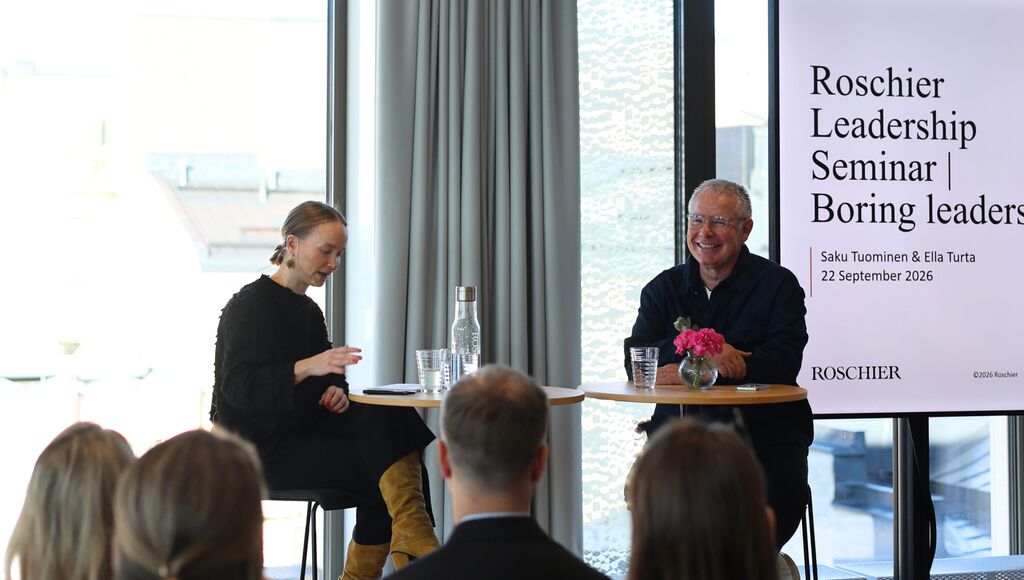
The quiet work behind good leadership
Insights|September 30, 2026
Good leadership often depends on everyday conversations and the time we give to people. Following their popularity last year, we brought back our leadership breakfasts this fall to make room for more conversations about what leadership looks like in practice.
Saku Tuominen joined us for the first session, titled Boring Leadership. He admitted that he dislikes boring things and does not consider himself a leadership expert. That made his take on the topic all the more interesting.
Saku recalled an education panel where a teacher said the most important task of a teacher was to inspire children. The answer stayed with him, but it also made him wonder whether the question had been framed the wrong way. Children are already curious. What if the teacher’s task is to notice that curiosity and take an interest in it?
He sees a similar tendency in leadership. Leaders often feel they must inspire or energize everyone around them. Saku suggested that taking an interest in people may do more. “Maybe we don’t need to excite them. Maybe we must keep them excited.”
He offered a less obvious example from his own life. For years, he found conversations at the dog park boring. Eventually, he began asking people questions and paying attention to their answers. The conversations changed. “I was the boring one,” he said.
At work, that kind of attention takes time. Saku described a weekly lunch at his company where everyone takes part and work topics are off limits. Each week, one person brings a question for the group. After three years, he said, the conversations have helped colleagues get to know one another beyond their roles. When they return to discussing goals and work, they know more about the people around the table.
“Trust takes time. It takes tens of discussions. It takes presence,” Saku said. He argued that leaders need to make room for those conversations, even when more immediate tasks are competing for their attention.
The discussion also turned to goals. Saku believes people want to achieve meaningful things. Leaders need to take the time to decide what matters, set clear goals and then trust people to work toward them. Trying to do everything, he said, often leaves too little time to do important work well.
Before the audience left, Saku gave everyone a small task: on the way back to the office or home, leave the phone and podcasts alone for a while. Look around and notice something you have never noticed before. It was a simple way to practice the attention he had been talking about all morning.
Read about the previous seminars:
Caroline Farberger and Annie Lööf on value-based leadership
Peter Wallenberg Jr. and Lovisa Cavalli Wallenberg on leadership over time and generations
Hans Stråberg on ultimate leadership
Ambassador Judith Gough on the art of diplomacy
Ice hockey legend and Olympic gold medalist Mats Sundin on sustainable leadership
Ambassadors Wegger Strømmen, Nicola Clase, and Jakob Nymann-Lindegren on diplomatic leadership
Eija Hakakari and Julia Macharey on outdated leadership
Lena Eliasson and Jessica Häggström continue on outdated leadership
Sami Pauni on inclusive leadership
Roleff Kråkström and Janne Tienari on kind leadership
The incompetent leadership: Roschier Leadership Seminars
Roschier Leadership Seminars conclude with reflections on incompetence and growth