Early support can prevent inequality from shaping children’s futures
Insights|July 3, 2026
A strong start in life is one of the most decisive factors for long-term outcomes. Discussions hosted by Prinsparets Stiftelse and Save the Children explored how early education, living conditions, and access to support are deeply interconnected and how gaps emerging early can shape a child’s future for years to come.
Across the discussions, speakers emphasized that inequality rarely begins later in life. It begins early, often before it is fully visible, and well before systems react.
Education was a central entry point into the broader discussion. Reading ability, in particular, was described as more than a school outcome. It is a prerequisite for navigating society and engaging with it.
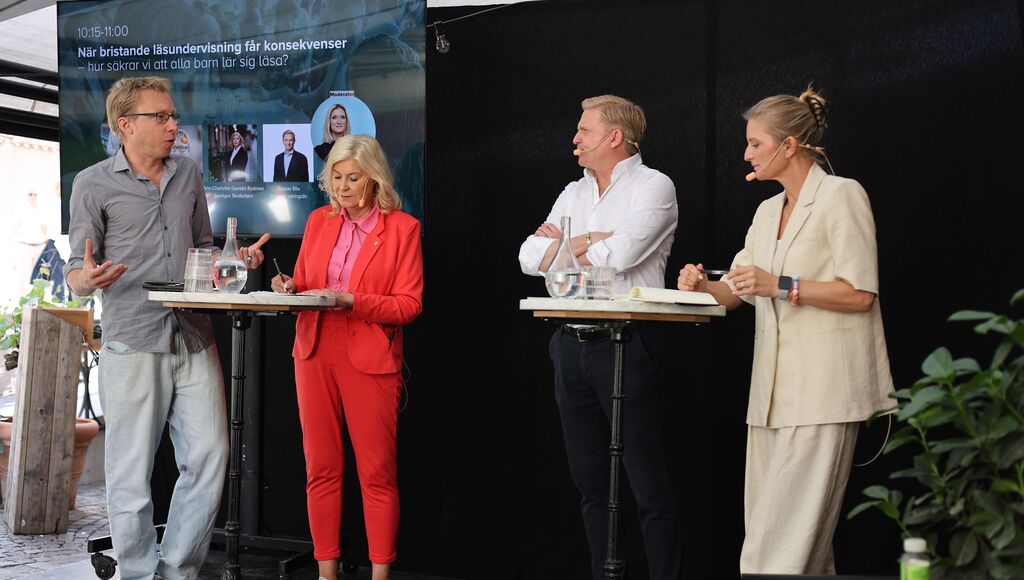
During Prinsparets Stiftelse‘s session on “When inadequate reading instruction has consequences – how do we ensure that all children learn to read?”, Björn Kindenberg, Municipal Lecturer and PhD candidate in language education at the City of Stockholm, said, “It is not just about employability – it is about understanding society and being able to participate in it.”
But the conversations also highlighted a more uncomfortable reality: the system does not always compensate for differences in starting points. Instead, it often reinforces them.
The discussions also highlighted that educational gaps are closely tied to the broader conditions children grow up in. Economic vulnerability is not confined to income – it affects access, participation and confidence in everyday life.
“Child poverty isn’t just about money; it’s about limited opportunities in everyday life,” said Sara Damber, Director of the Sweden Program, Save the Children, during the session “A richer country, poorer children: Growing up in Sweden in 2026”.
These are not isolated challenges. They accumulate over time, shaping both educational outcomes and long-term opportunities.
Another pattern that emerged was the importance of continuity. Schools that succeed in addressing unequal starting points are rarely defined by a single method. Rather, they are characterized by stability, leadership, and a shared approach over time.
Taken together, the discussions pointed to one clear conclusion: a strong start cannot be secured through isolated interventions. It depends on systems that consistently support children across multiple dimensions and do so early enough to make a lasting difference.
Read more:
Societal challenges in focus at House of Many Voices in Almedalen 2026