
Building a quantum future requires more than technology
Insights|June 12, 2026
Technology may drive innovation, but technology alone is rarely enough to create lasting success. That was a key takeaway from a recent event hosted by our Brand protection team together with BOND creative agency, Kvanttinova and FiCCC, where speakers explored how companies can build strong brands, earn market leadership, and protect the value they create.
The branding event for quantum and semiconductor startups and scaleups brought together perspectives from Bluefors, branding agency BOND, and Roschier Partner Markku Tuominen. Together, they offered a practical look at what it takes to grow a company from an innovative idea into a trusted and valuable business.
Key takeaways
- Brand is a business tool, not a marketing exercise. Stay consistent and build it deliberately.
- Evolve your brand as your business grows and your audience changes.
- Be known before you are needed. Brand building starts long before customers are ready to buy.
- Originality creates competitive advantage. Distinctive brands are easier to remember and harder to copy.
- Find one simple idea and repeat it consistently over time.
- Protect what you create early. Trademarks, copyrights, and other IP rights help safeguard your investments.
- Strong IP protection strengthens brand value, reduces risk, and supports company valuation.
Building a brand alongside business growth
The discussion began with Bluefors, one of Finland’s leading quantum technology companies. The company shared how it has grown from a university spin-out into a global market leader in cryogenic systems used in quantum computing.
The recurring theme was consistency. As the company grew, its brand evolved alongside its business, customers, and markets. At the same time, it maintained a clear vision and strong customer focus. The experience highlighted how brand building is not a one-time exercise but an ongoing process that develops together with the company.

Originality creates competitive advantage
Representatives from Bond focused on the role of branding in business growth. Their message was straightforward: companies do not necessarily win because they have the best technology. They win because customers remember them, trust them, and understand what makes them different.
The speakers emphasized the importance of finding a company’s original idea and building communication around it. Distinctive brands are easier to recognize, harder to copy, and more likely to create long-term competitive advantage.
Another key message was that awareness needs to be built before customers are actively looking to buy. Strong brands create familiarity and trust long before purchasing decisions are made.
Protecting what you build
The legal perspective was provided by Markku, who explained why intellectual property protection should be an integral part of any growth strategy.
According to Markku, legal protection gives companies exclusive rights to use their brands and creates a foundation for long-term value. “Legal protection creates exclusive rights to use the brand in commerce,” he said.
He stressed the importance of trademarks and encouraged companies to think about intellectual property early, conduct trademark searches before launch, and secure registrations before entering the market.
“Registering a trademark is the only reliable way to create trademark protection,” Markku said.
He also emphasized the value of distinctive trademarks. Using Bluefors as an example, he described it as “a super good trademark” because it is unique and not directly descriptive of the company’s products or services.
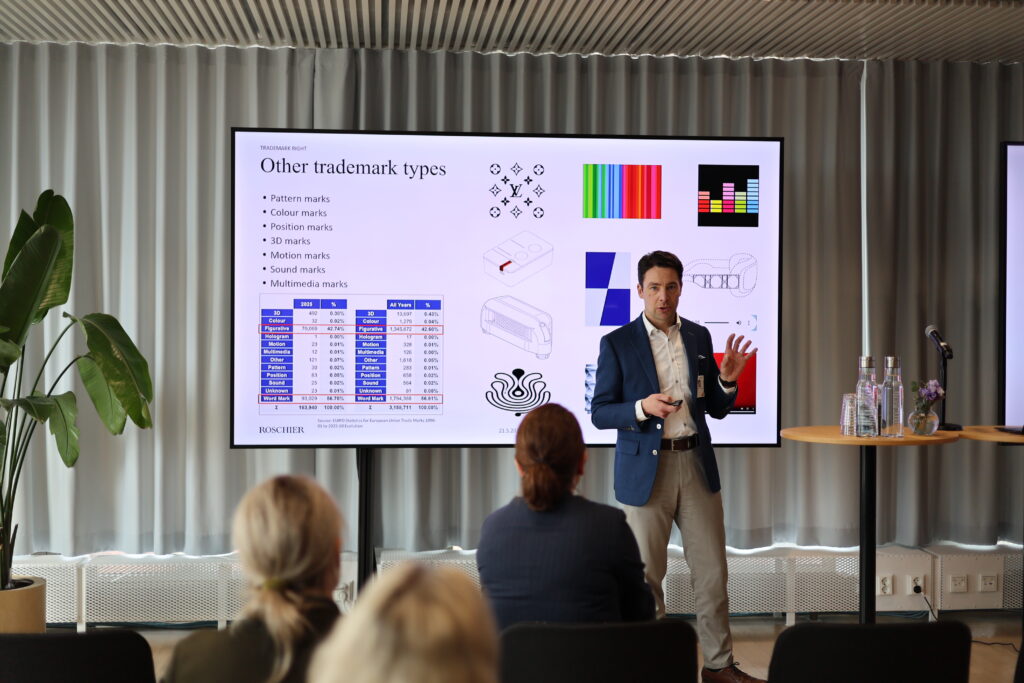
Beyond trademarks, Tuominen discussed copyrights, design rights, domain names, and other intellectual property tools that help companies protect their innovations and market position.
Brand value and business value go hand in hand
Intellectual property protection is not only about preventing infringement. It also plays an important role in company valuation, fundraising, and acquisitions.
“When you have legal protection, the ownership is clear,” Markku said.
Clear ownership of intellectual property reduces risk, supports international growth, and strengthens a company’s position during due diligence processes. Well-managed intellectual property portfolios can also contribute to stronger valuations and better deal terms.