What gives us the human edge – Nordic Business Forum 2026
Insights|September 22, 2026
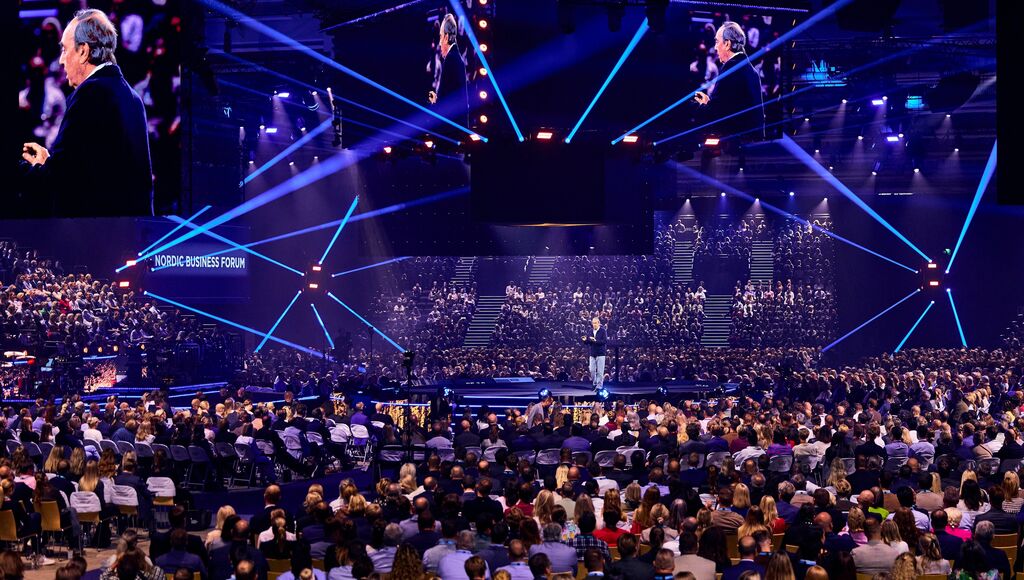
For our ninth consecutive year as a Nordic Business Forum partner, we joined business leaders from around the world in Helsinki to consider a question that feels increasingly urgent: what remains distinctly human in a world being reshaped by technology?
This year’s theme, “The Human Edge,” was approached through decision-making, performance, and collaboration. Across two days, the speakers offered very different perspectives on where that edge comes from. It could be found in our judgment when information is incomplete, our ability to build trust, the courage to question accepted wisdom, and the conversations through which we understand one another.
These ideas closely reflect what we aim to bring to our own events. Whether we are gathering people for a leadership seminar, an intimate breakfast, or House of Many Voices, we want to embrace different perspectives and genuine dialogue. Technology may give us faster access to information, but it is people who give that information meaning.
Judgment in the age of AI
Several speakers examined how artificial intelligence is changing not only what we do, but also how we think.
Digital anthropologist Rahaf Harfoush warned that we are moving from a culture of searching to one of generating. Instead of consulting several sources and forming our own view, we can now ask a tool for a single answer. This is convenient, but it can gradually weaken the critical thinking and subject-matter expertise needed to judge whether that answer is any good.
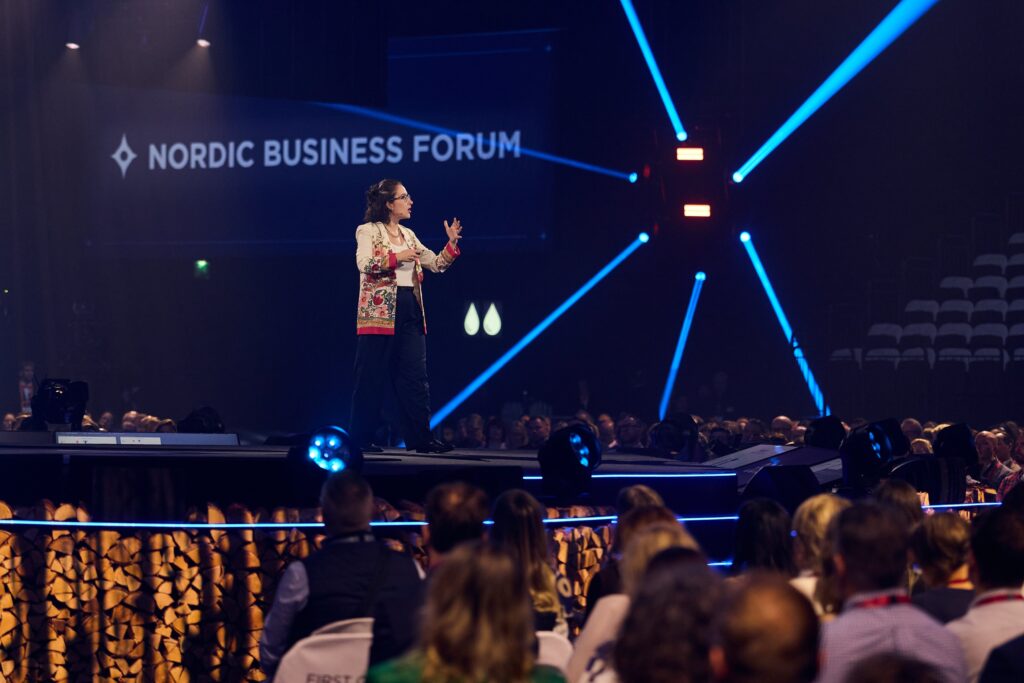
For Rahaf, organizations therefore need to keep investing in human expertise. AI can greatly extend the capabilities of someone who already understands a subject. Without that foundation, however, it can produce convincing work that the user is unable to assess.
Innovation strategist Shawn Kanungo arrived at a related conclusion. As technology makes execution easier, judgment becomes more valuable. The important question is no longer only what we can automate, but what we should choose to do. He encouraged leaders to reconsider familiar processes from the beginning, deciding what could be automated or removed and where more human contact should be deliberately retained.
Kjell A. Nordström described another source of human value as “wild knowledge,” the experience and understanding that people possess but cannot always put into words. This kind of knowledge develops through practice, relationships, and familiarity with a particular context. His message for the Nordic countries was optimistic. Our combination of advanced technology and high levels of trust gives us a strong basis for developing new ways of working.

Together, these perspectives suggested that the human edge does not depend on competing with technology. It comes from knowing how to use it without surrendering our curiosity, expertise, or responsibility.
Performance through learning
Performance was another central theme, but the speakers rarely presented it as a matter of simply working harder.
Entrepreneur Steven Bartlett focused on the role of experimentation and failure. Drawing on his own experiences, he argued that failure provides the feedback needed to make better decisions. The greater risk is often the time organizations lose while waiting for certainty.
For decisions that can be reversed, moving quickly allows a team to test an idea, learn from the result, and change direction. More consequential decisions naturally require greater care. Knowing which kind of decision we are facing helps prevent corporate procrastination while preserving thoughtful judgment where it matters most.
Angela Duckworth also shifted attention away from individual willpower alone. Her work looks at the people and environments that bring out our best. Performance is influenced by the conditions around us, including the expectations, support, and examples provided by other people. For leaders, this means that developing talent is not only about finding highly motivated individuals. It is also about creating a setting in which they can succeed.
The same idea was present in our exclusive breakfast with former Netflix Chief Talent Officer Patty McCord. Patty challenged leaders to think of a workplace as a team rather than a family. Great teams require honesty, clarity, and a shared understanding of what good performance looks like. They also need leaders who can adapt when established ways of working no longer fit the situation. Patty drew on both the pandemic and the arrival of