Forward Finland Forward: Courage, Grit, Money and Timing
Insights|June 16, 2026
What does it take to turn an idea into a company, a company into a global success story, and ambition into lasting economic growth?
These questions formed the basis of the third and final discussion in the Forward Finland Forward series, a collaboration between Roschier, the University of Helsinki and Miltton. Hosted at Miltton House, the event brought together founders, investors, business leaders, students and policymakers to explore the ingredients behind growth and renewal in Finland.
The discussion opened with remarks from Tero Ojanperä, Chairman of the Board of Miltton Group and Founder of Silo AI, who challenged Finland to adopt new technologies more boldly and at greater speed. Reflecting on themes from his recent work on Finland’s future competitiveness, Tero argued that many of the country’s challenges, from economic growth and workforce shortages to education and security, are deeply interconnected. He emphasized the importance of embracing technological change, particularly artificial intelligence and agent-based systems, not only as tools for productivity but as opportunities to rethink how society operates.
A recurring theme throughout the evening was the relationship between optimism and action. Tero noted that meaningful change requires a vision of a desirable future. Without hope, there is little incentive to act.
From startup nation to scale-up nation
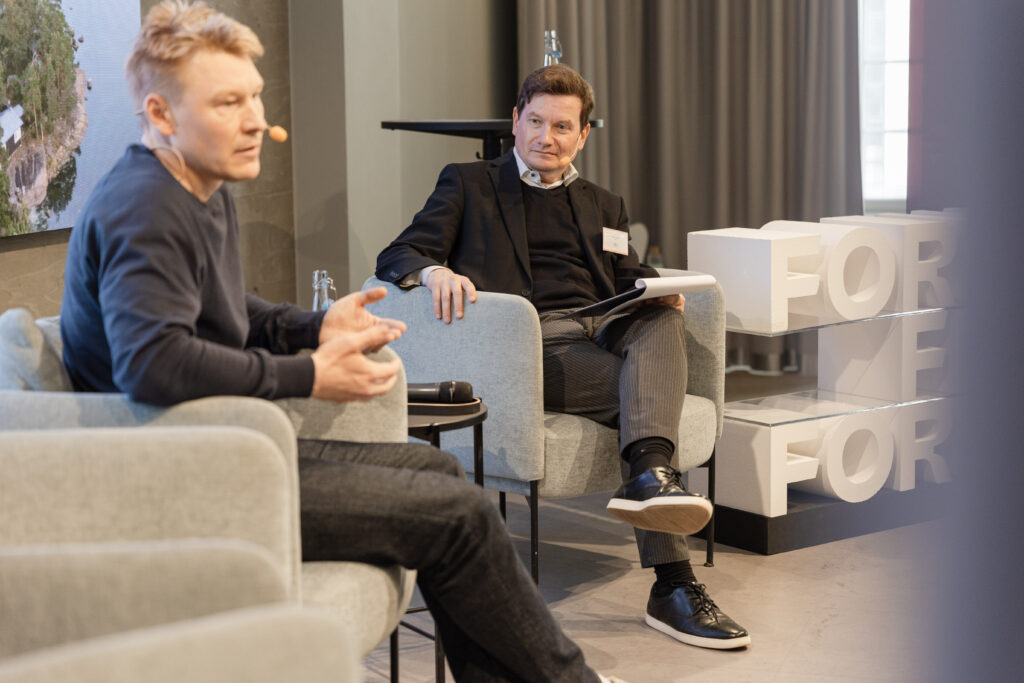
The evening’s fireside discussion between Kaius Niemi, Deputy CEO of Miltton Group, and Jyri Engeström, Partner at Lifeline Ventures, focused on Finland’s entrepreneurial ecosystem and the country’s next stage of development.
Jyri challenged the common perception that Finland struggles to create startups. In his view, the country has already demonstrated its ability to generate innovative companies. The real challenge lies in helping those companies scale.
“Finland does not have a startup problem. Finland has a scale-up problem,” he said.
According to Jyri, Finland often underestimates the potential of its most successful growth companies. While significant progress has been made in building a vibrant startup ecosystem, societal attitudes toward risk, ambition and failure continue to influence how far companies are encouraged to grow.
The conversation also explored cultural factors shaping entrepreneurship. Jyri argued that Finnish society often places too much emphasis on avoiding mistakes, which can discourage experimentation and bold decision-making. In contrast, successful founders and investors tend to think in terms of portfolios and probabilities, accepting that not every initiative will succeed.
Rather than waiting for certainty or consensus, organizations should be prepared to test multiple approaches simultaneously, learn quickly and move forward.
Growth requires more than capital
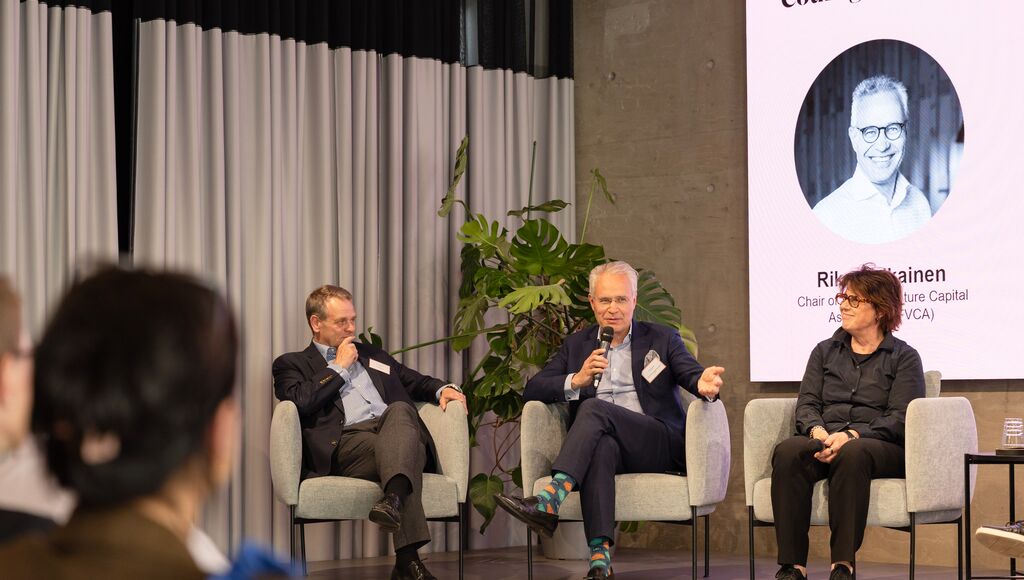
The panel discussion that followed brought together Riku Asikainen, Chair of the Finnish Venture Capital Association (FVCA), Jan Vapaavuori, Chairman of Finnvera, and Mirkku Kullberg, Chairman of the Alvar Aalto Foundation.
While access to capital remains important, the panelists emphasized that growth depends on much more than funding alone. Leadership, ambition, networks, culture and societal confidence all play a role in determining whether businesses succeed.
Several speakers pointed to Finland’s tendency toward caution and consensus. While these qualities have historically served the country well, they may also limit the speed at which opportunities are seized in an increasingly competitive global environment.
Mirkku highlighted the importance of creativity, international networks and cultural openness as drivers of economic success. Drawing on her experience working at the intersection of culture and business, she argued that innovation often emerges when different disciplines and perspectives are brought together.
Jan reflected on Finland’s broader societal mood, suggesting that fear and uncertainty have become increasingly prominent in public debate. Economic concerns, geopolitical tensions and rapid technological change can easily create a sense of paralysis. Yet he also highlighted Finland’s enduring strengths, particularly its education system and ability to adapt.
Riku encouraged a shift from a preservation mindset toward a growth mindset. Finnish companies are often exceptionally well managed, but many continue to follow playbooks designed for a different era. Future success, he argued, requires greater willingness to invest, expand and pursue international opportunities.
Looking forward
As the series concluded, the discussion returned to a central question: how can Finland remain dynamic in a world defined by constant change?
The answers varied, but several themes emerged consistently. Growth requires courage, curiosity, and the willingness to act before every variable is known. And perhaps most importantly, it requires confidence in the future.
The final message of the evening was ultimately optimistic. Finland possesses world-class talent, strong institutions, growing entrepreneurial communities and a new generation eager to build. The challenge is not a lack of potential, but how boldly that potential is pursued.
As one participant observed, small countries remain relevant by staying intellectually and culturally dynamic. The task ahead is not simply to adapt to change, but to help shape it.
Read about the two other discussions:
Forward Finland Forward: A founders’ mindset for Finland’s next chapter
Forward Finland Forward: Creative destruction as a collective effort
Read about the Forward Finland Forward series:
Forward Finland Forward: Exploring founders’ mindset for the future of Finnish leadership