Competition litigation in focus at this year’s Roschier Disputes Forum
Insights|June 5, 2026
Roschier Disputes Forum brings together leading legal practitioners, in-house counsel, academics, and industry experts to discuss developments in the disputes landscape. This year’s forum focused on competition litigation and enforcement, exploring recent case law, evolving litigation trends, and the practical challenges involved in pursuing and defending competition damages claims across Europe.
Opening the 16th Roschier Disputes Forum, Roschier’s Group Managing Partner Johan Sidklev reflected on the firm’s 90th anniversary and its development over the decades, while remaining guided by the same core principles. He noted that although uncertainty has always been part of the business environment, taking different forms over time, clients continue to value the same things: foresight, reliability, and trusted long-term relationships.
Key takeaways from various speakers
- Private enforcement continues to gain momentum across Europe, with competition damages actions playing an increasingly important role alongside public enforcement.
- Recent CJEU judgments, including Heureka, are strengthening claimants’ ability to pursue damages claims and influencing litigation strategies across Member States.
- Digital markets regulation, such as the Digital Markets Act (the DMA) and new regulatory tools, are creating fresh opportunities for competition litigation, particularly in the technology sector.
- Effectively quantifying competition damages often require more than sophisticated economic models: transparent and robust analyses that are grounded in commercial reality are key aspects of convincing expert evidence.
- Establishing causation remains one of the most challenging aspects of competition damages litigation, requiring lawyers, clients, and economists to work closely together to build a credible counterfactual.
- As competition disputes become more complex and cross-border in nature, practitioners must combine legal expertise, economic analysis, and strategic judgment to navigate an evolving enforcement landscape.
Private enforcement continues to gain ground
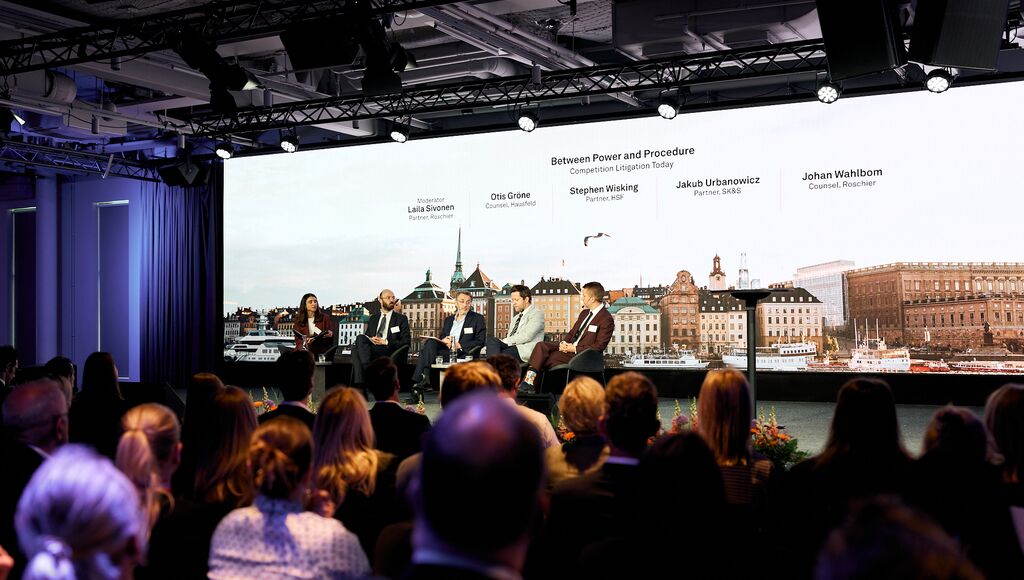
The first panel, Between Power and Procedure: Competition Litigation Today, brought together Stephen Wisking (HSF), Jakub Urbanowicz (SK&S), Johan Wahlbom (Roschier), and Otis Gröne (Hausfeld), with Laila Sivonen (Roschier) serving as moderator. Looking across developments in the UK, Germany, Poland, Sweden, and at EU level, the discussion highlighted how competition litigation is becoming an increasingly important complement to public enforcement.
A recurring theme was the growing role of private enforcement and the expanding opportunities for claimants to pursue damages actions. Recent case law from the Court of Justice of the European Union (the CJEU) have generally made it easier for injured parties to pursue competition damages claims. Particular attention was given to the Heureka judgment, which was highlighted as a significant development in jurisdictions where limitation periods have traditionally been applied strictly. The panelists also emphasized the fundamental importance of the EU Damages Directive in facilitating claims for damages arising from competition law infringements.
The discussion further explored how litigation landscapes are evolving across Europe. The panel observed that collective actions and litigation funding continue to drive a highly active market in the UK, where competition litigation remains one of the most dynamic areas of disputes practice. The growing number of standalone and collective claims was noted as a key trend. Panelists also pointed to digital markets regulation, market investigations, and new enforcement tools as factors creating fresh opportunities for litigation across jurisdictions.
For Sweden, private enforcement is currently mainly driven by enforcement decisions adopted by the European Commission. One such example is PriceRunner v. Google Shopping, where the forthcoming judgment is expected to address several issues that have not yet been fully tested before Swedish courts. The Swedish Competition Authority, coming from a period of public underenforcement, has been more aggressive in recent years which could lead to additional follow-on cases in the future.
Litigation through a European lens
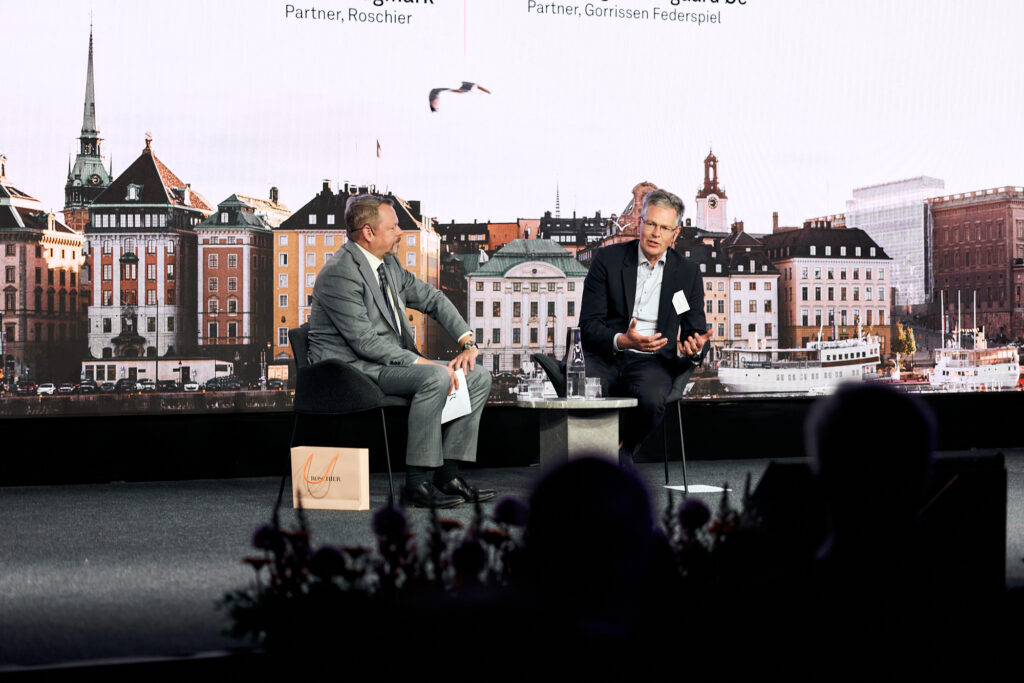
Following the opening panel, Kristian Hugmark spoke with Henrik Saugmandsgaard Øe, former Advocate General at the Court of Justice of the European Union and now Partner at Gorrissen Federspiel, about the practical realities of litigating EU law and competition cases before national courts and in Luxembourg.
Their discussion explored key aspects of EU litigation, including the role of the CJEU in shaping legal interpretation, the interaction between national and EU legal systems, and the use of preliminary references. The conversation also examined the practical challenges of arguing EU law before different courts and the importance of understanding the broader European legal framework.
The session further addressed developments in competition litigation and private enforcement, including the growing relationship between public enforcement decisions and follow-on damages actions. The discussion also touched on the interpretative methods employed by the CJEU and their significance for practitioners handling EU law disputes.
The challenge of proving harm
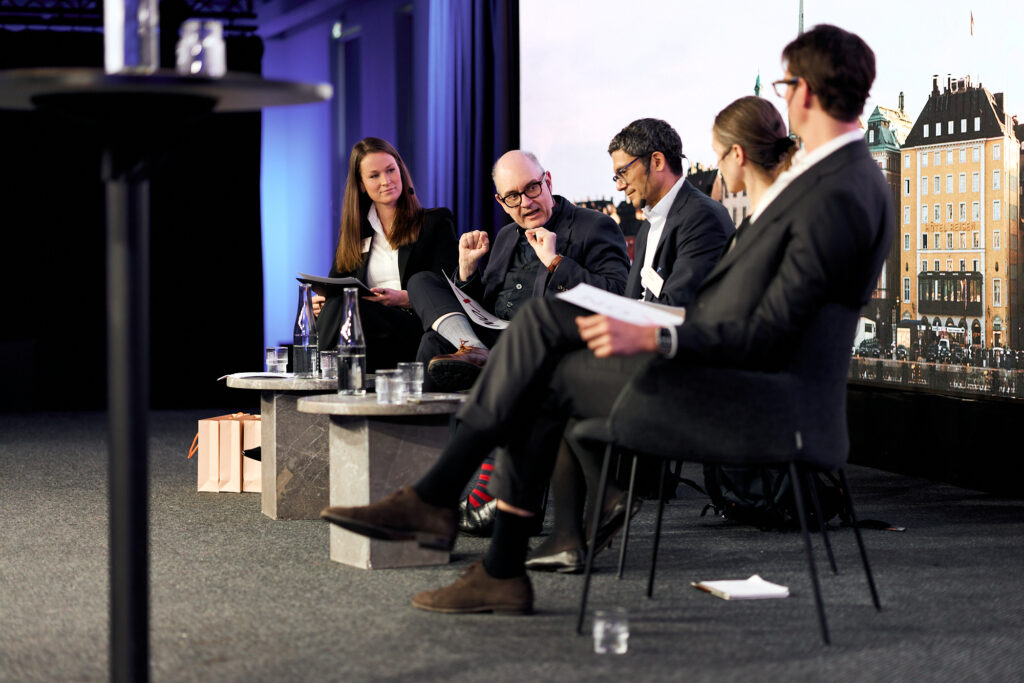
The second panel of the day, The Numbers Game: Causation and Quantum in Practice, turned to one of the most challenging aspects of competition litigation: proving not only that an infringement occurred, but also demonstrating the harm it caused and quantifying the resulting damages. The discussion was moderated by Annika Pynnä Lindskog, Counsel in Roschier’s Dispute Resolution practice in Stockholm, and featured competition economists Dr. Jorge Padilla (Compass Lexecon) and Dr. Adrian Majumdar (RBB Economics), alongside Legal Counsel Marte Fisknes of Posten Bring, and Roschier Senior Associate Oskar Magnusson.
Rather than focusing solely on economic theory, the panel examined the practical realities of building a damages case. The discussion highlighted the importance of assembling the right team from the outset, bringing together lawyers, economists, and internal stakeholders at the company to assess both the merits of a claim and the evidence available to support it.
The discussion repeatedly returned to the challenge of establishing causation. Competition damages cases require courts to reconstruct a hypothetical world in which the infringement never occurred and then compare that world with reality. Building that counterfactual was described as ultimately “a team sport,” requiring close collaboration between clients, counsel, and experts.
From economic theory to courtroom reality
The panel also expressed the view that sophisticated economic analysis alone is often not enough. Courts must be persuaded not only by the calculations but also by the reasoning behind them. The discussion cautioned against relying on simple comparisons that may appear convincing but fail to demonstrate a true causal link, emphasizing the risk of confusing correlation with causation and the importance of identifying and controlling the many factors that may influence prices and market outcomes beyond the infringement itself.
Another theme was the need to balance complexity with clarity. While competition damages cases increasingly rely on advanced economic models and large datasets, the ultimate audience remains the court. In discussing the role of expert evidence, the panel emphasized that facts take precedence over theory, particularly in litigation. Economic models can help explain market outcomes, but they must remain firmly grounded in evidence and commercial reality.
The panel concluded with a broader reflection on the future of competition damages litigation. As private enforcement continues to grow across Europe, courts, lawyers, economists, and businesses alike will need to navigate increasingly complex questions of causation, evidence, and quantification. While the legal frameworks continue to evolve, one message emerged clearly from the discussion: successful competition litigation requires legal analysis, economic expertise, and practical judgment in equal measure.
Looking ahead
The day closed with a shared recognition that competition litigation has entered a new phase. Across Europe, private enforcement is becoming more sophisticated, more international, and more strategically important. For practitioners and businesses alike, understanding both the legal and economic dimensions of these disputes will be essential as the field continues to develop.
Read more about this topic:
Roschier Disputes Forum 2025: How technology is reshaping strategy and legal risk